Our Multilingual Markets Fieldwork Across Four Major Malawian Marketplaces

Between April and July, we spent weeks observing, interviewing, and running focus-group discussions with traders in Limbe, Mzuzu, Lilongwe Central, and Lilongwe Tsoka markets. Guided by our core research team, we collected both quantitative and qualitative data to understand how language practices shape everyday trade, customer relations, and commercial strategies in urban marketplaces
Limbe Market
Limbe was our initial data-collection site. We began fieldwork with a mix of anxiety and anticipation, unsure what to expect from a market survey. Although almost all of us are frequent visitors, the market’s size surprised us. Many sections were new even to regulars. Of the many jaw dropping sections that we saw, the local brew (kachasu) was of particular interest to all of us as we never imagined a market would have a special section for beers. I learnt that day! Over 30 days we conducted immersive fieldwork combining surveys, interviews, ethnographic observation, and focus-group discussions across produce, dry fish, clothes, fruit, rice, local brew, and more. Led by the PIs, we secured access through the market master and section heads, adapted to peak trading rhythms and weather disruptions, and navigated practical challenges such as stall crowding and occasional demands for payment. Overall, Limbe Market emerges as a multilingual, multimodal marketplace where language use is strategically shaped by social cues and commercial imperatives.
Mzuzu Market
We spent a month collecting both quantitative and qualitative data and exploring how different languages influence trade in the dynamic urban market. Each day we engaged traders using questionnaires, interviews, observations and focus group discussions. The main focus was on how language choices shaped their businesses. We were really struck by traders’ ability to quickly switch languages depending on customer or context. In Mzuzu, most traders were switching between Chichewa, Tumbuka and English. The hardest part during data collection was time. Traders were constantly attending to customers. To add on that, questionnaires and interviews were conducted mostly while standing up. To adapt to the busy schedules of traders, we had to show respect for their time and priorities.
Lilongwe Central Market
What struck me the most about Lilongwe Central Market was its sheer size and cultural diversity. There were traders from all over Malawi and beyond, each with their own interesting perspectives on language. A lady from Tanzania even gave me a free snack because I greeted her with the few Kiswahili words I know! I’d often heard traders say they give special treatment to people who speak their language, and this was such a heartwarming lived example. The main hurdles were research fatigue among traders and, with elections only a few weeks away, heightened political tensions that required us to be extra tactful. Building on lessons from the previous two markets, we found efficiency gains that helped us avoid taking up too much of each trader’s time, and our interviews felt conversational and fluid. One of my most memorable interactions was with a young Malawian man who was teaching himself Spanish on Duolingo and suggested we develop something similar to help traders learn local languages.
Lilongwe Tsoka Market
I spent a lot of time gathering qualitative data and looking into how language, trade, and community all come together in this busy place. Every day, I interviewed traders and watched how they interacted with each other, trying to figure out how their language use affects the market. I was always impressed by how resourceful they were, seeing them use a wide range of strategies, from switching languages easily to subtle, persuasive negotiation. The hardest part? Time. Because the traders had busy schedules, many FGDs were done while standing up and took less than twenty minutes. To adapt, we had to be very focused, clear, and respectful of their time and business. Despite these constraints, the experience reinforced the market’s profound role. The market is not just a place of transaction, but a vibrant hub where language actively shapes social relationships. Our meticulous transcriptions helped unearth compelling themes, proving that in such environments, sensitivity and methodological rigor are paramount to unlocking meaningful insights.
Conclusion
Markets were multilingual and adaptive across all research sites. The experiences tell that markets are deep social spaces where language functions as a practical resource for commerce and community. Traders routinely code-switch, employ gestures and improvised signs, and adjust register and address terms to customers’ backgrounds and appearances. Busy trading rhythms, weather, and time constraints required flexible, respectful methods such as brief interviews, participant help in stalls, and FGDs within stall clusters, which in turn produced richer, more authentic data. These experiences suggest that any intervention aiming to support market participants should prioritise practical, time-sensitive, and context-aware language tools.
BAAL Conference – September 2025

On 5th September Victor, Kristinn, Colin, Elysha and Elvis presented a colloquium on “Multilingual Markets: Investigating Language and Livelihood in Multilingual Settings” at the British Association of Applied Linguistics (BAAL) annual conference, hosted at the University of Glasgow. This included an introductory context setting talks by Colin, results from the pilot survey that was conducted in Ghana by Kristinn and Elysha, a presentation of some preliminary results from the first round of data collection in the Malawi markets by Victor as well as an open discussion led by Elvis.
Research Assistants Complete their training Week
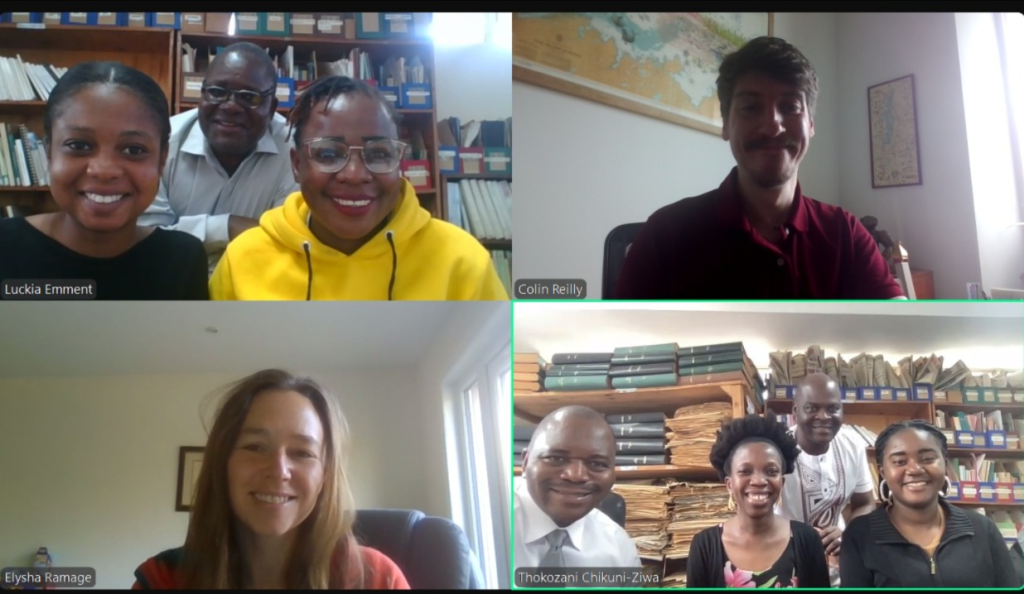
We welcome aboard the team our wonderful research assistants who completed their training ready to go out into the field to collect data.
“Training week was exciting and helpful. I really liked the observation exercise because it showed me what fieldwork will be like and helped me see how theory connects to real life. The presentations were clear and well explained, which made it easy to understand the main ideas and what is expected of us. The training helped me learn more about the project and made me even more excited to take part in research about how people use language in everyday life”. Charlotte
Research Team gathering in Malawi
On 6th Jan the team from University of Glasgow and Stirling University flew out to Zomba, Malawi to meet with the University of Malawi team to get the multilingual markets project up and running. This was the first time the whole team had got together to work collaboratively on this project. The project is interdisciplinary and mixed methods, and the team discussions brought expertise from economics, linguistics and history. Additionally, the team brings skills in different methodologies including interviews, ethnographies, focus groups, narrative histories and surveys.
Time was spent reviewing data from a previous project to infom the data collection on the current project as well as discussion on data management, finalising data collection methods, training and recruitment of RA’s and visits to identified fieldwork sites. The next steps will see the completion of recruitment and training of a post-doctoral researcher and research assistants and begin data collection across six markets in Malawi.
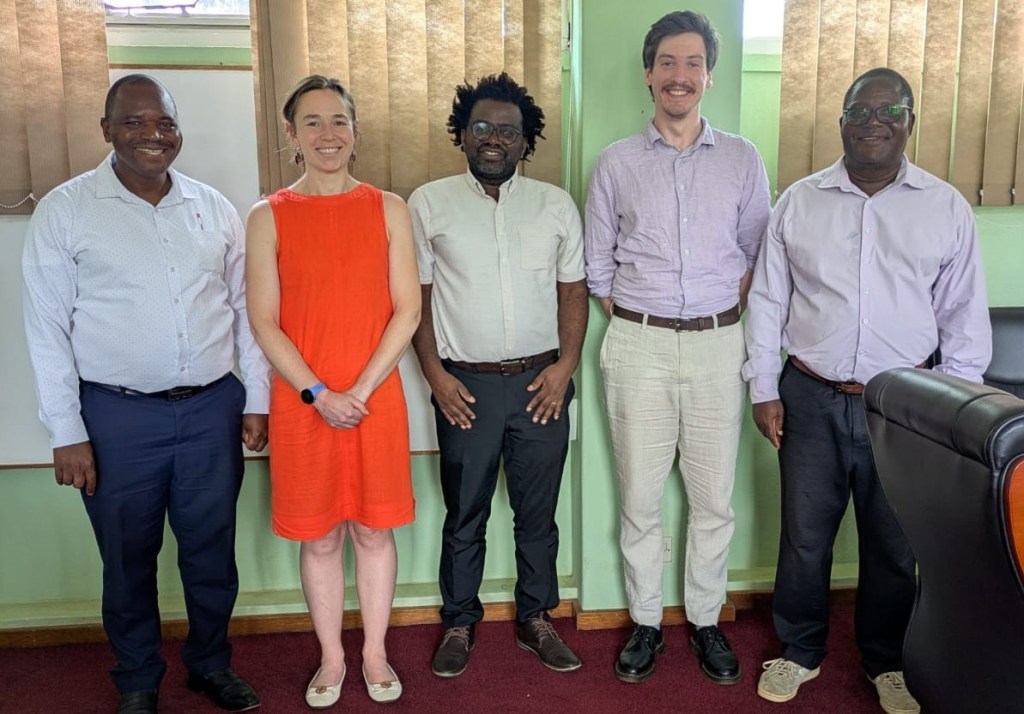
Pictured is a team lunch and some of the team meeting the Executive Dean of the School of Humanities and Social Sciences at the University of Malawi.
Project Launch

Researchers at the University of Stirling, University of Malawi, and University of Glasgow have recently launched a collaborative project Multilingual Markets: Investigating language skills for informal employment in Malawi. This project is funded by the British Academy as part of their ODA International Interdisciplinary Research Projects. It will run from 2024-2026, and will conduct a mixed-methods study of market traders in Malawi, deploying in-depth ethnographic observation in conjunction with a survey of background, economic activity, and language use. The research team includes Dr Colin Reilly, Dr Gift Kayira, Dr Ahmmardouh Mjaya, Prof Winford Masanjala, and Prof Kristinn Hermannsson.”
 Multilingual Markets